How Often to Post on TikTok: A Practical Growth Plan
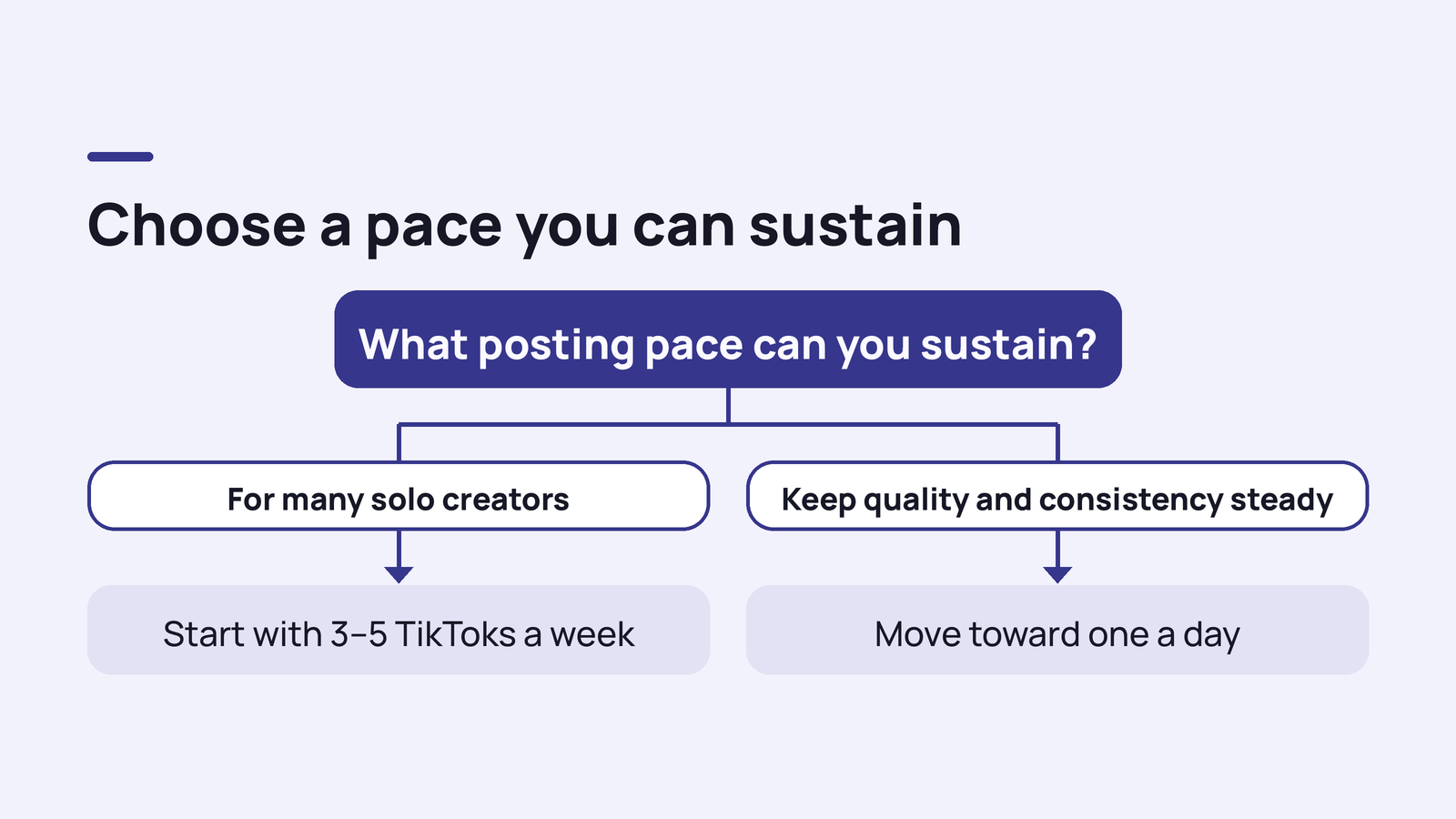
For most creators, start with 3–5 TikToks a week, then move toward one a day only if you can keep quality and consistency steady. Use a four-week test to find a pace that supports growth without causing burnout.
Step 1: Choose a posting pace you can sustain
If you’re deciding how often to post on TikTok, begin with a schedule you can maintain—not the maximum number of videos you can publish in a busy week. For many solo creators, three to five posts a week is a practical starting point. It gives you regular chances to learn what resonates while leaving time to plan and make each video.
Posting every day can also work if you have a steady supply of ideas and can keep the videos useful or entertaining. It is not a requirement for gaining followers, and posting more does not guarantee more reach. Consistency means keeping a repeatable rhythm, not forcing a video out every day.
Example: A home-cooking creator could start with posts on Monday, Tuesday, Thursday, and Saturday. If that schedule fits around cooking and editing, keep it for a month before deciding whether to add another day.
Step 2: Build a weekly mix before adding more posts
Frequency is easier to maintain when you know what each post is for. Choose a few repeatable formats tied to your topic. A mix might include a quick how-to, an answer to a common question, a behind-the-scenes clip, and a response to a comment. These formats give you a starting point without making every video feel identical.
Plan ideas first, then fit them into your available posting days. For example, a plant-care creator could film one watering demonstration, one “why are the leaves yellow?” answer, and one weekly progress update. That is three distinct posts from one topic area, rather than three versions of the same tip.
Keep a short idea list so you are not inventing a concept each time you post. If you also publish on other platforms, plan each channel for its own audience and format. For Instagram timing, see Best Time to Post on Instagram: A Practical Creator Guide.
Step 3: Space posts across the day if you publish more than once
There is no universal waiting period you must follow between TikToks. If you post more than once in a day, avoid uploading several videos back-to-back as a default. Spacing them across the day makes it easier to review how each post performs and keeps your publishing routine manageable.
As a starting experiment, try posting in two different windows several hours apart—for example, one video around lunchtime and another in the evening. Treat that as a scheduling choice to test, not a rule about how TikTok distributes videos. Your audience’s habits and your own analytics matter more than a fixed gap.
Example: If you publish two videos on Friday, post one at midday and the other later in the day. Compare their results over time, rather than assuming the second video failed because it went up too soon or too late.
Step 4: Give viewers a reason to stay in the first seconds
The phrase “three-second rule” is often used to describe how quickly viewers decide whether to keep watching. It is not a guarantee that every video must follow a precise three-second formula. The useful takeaway is to make the opening clear and relevant: show the result, name the problem, or pose the question the video will answer.
For example, instead of opening a repair video with a long introduction, start with, “Here’s why your zipper keeps getting stuck.” Then show the problem and move into the fix. A direct opening helps viewers understand what they will get from the video.
Strong openings do not replace a sustainable posting schedule, but they make each post more purposeful. If you are short on time, spend it on a clear idea and edit rather than increasing your weekly count with videos that have no specific point.
Make your posting plan easier to manage
Planmasta — AI for creators helps you plan, create, and grow on TikTok, Instagram, YouTube, and more, powered by AI.
Plan your next postsStep 5: Test your schedule for four weeks
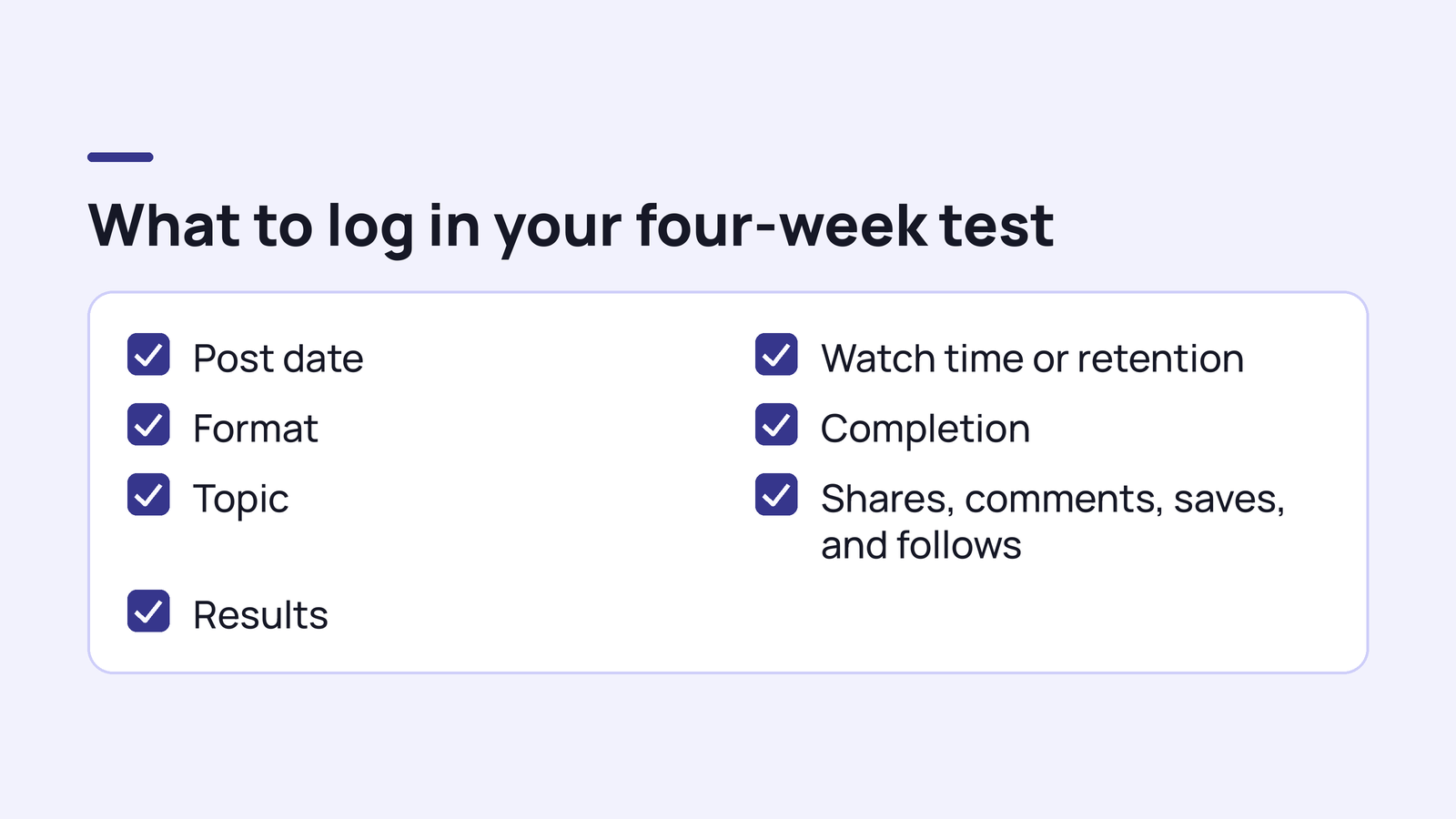
Choose a posting pace and keep it steady for four weeks before making a major change. A short test gives you a more useful comparison than changing your frequency every few days. Keep a simple log of the post date, format, topic, and results so you can see which patterns repeat.
Look beyond views. Depending on your goals, review watch time or retention, completion, shares, comments, saves, and follows. A post with fewer views may still show that a topic attracts the people you want to reach. Compare similar formats when possible; a short tutorial and a longer story may not be directly comparable.
Example: If your four weekly posts include two tutorials and two behind-the-scenes clips, check whether one format consistently earns more saves or follows. In the next test, keep the overall schedule stable and try another topic or opening within that format.
Step 6: Adjust the pace based on quality and results
After the test, decide whether to maintain, increase, or reduce your posting frequency. Add a post only if you have enough ideas and production time to make it worthwhile. If the schedule leaves you rushing, missing posts, or repeating topics without a clear reason, scale back and use that time to improve planning or execution.
For example, if four weekly posts are manageable and you have several strong ideas left over, test five per week for another month. If the extra day leads to weaker concepts or inconsistent publishing, return to four. The aim is a reliable process that gives you regular opportunities to learn—not a particular number on a calendar.
Use the same method when a format or topic changes. Avoid treating one unusually high or low-performing video as proof that your whole schedule needs to change; look for patterns across multiple posts.
Step 7: Separate posting frequency from TikTok income
Posting more often does not translate directly into a specific amount of income. Views alone cannot tell you how much a creator will earn: eligibility, location, the monetization option, qualified views, and other terms can affect payouts. There is no reliable universal view count for earning $100 or $5,000.
If a program pays based on a rate per thousand qualified views, the basic estimate is: required views = target income ÷ rate per thousand views × 1,000. You need your own applicable rate to use that calculation, and the result is only an estimate. Other income sources, such as partnerships or selling your own work, follow different models.
It is possible for some creators to make a living through TikTok-related work, but posting frequency alone does not make that outcome predictable. Build an audience and a sustainable publishing process, then assess income using the monetization options actually available to you.
Common mistakes when choosing how often to post
- Copying someone else’s volume. Another creator may have a different team, workflow, or audience. Start with a pace that fits your resources.
- Posting to meet a quota. If a video has no clear idea or viewer benefit, increasing your count may not improve the experience for your audience.
- Changing the schedule too quickly. A few posts are not enough to identify a reliable pattern. Keep a test period and compare results across similar content.
- Assuming there is one perfect time or gap. Test posting windows with your audience instead of treating general advice as a platform rule.
- Measuring success only in views. Watch for signals that match your goal, such as relevant comments, shares, saves, or follows, as well as viewing behavior.
A simple plan is often enough: choose three to five weekly posts, map out the ideas, space them sensibly, and review the results after four weeks. If you want help organizing content across platforms, Planmasta — AI for creators helps creators plan, create, and grow on TikTok, Instagram, YouTube, and more.
Read next
What's next
Next, learn how to turn a list of content ideas into a weekly schedule you can keep up with.